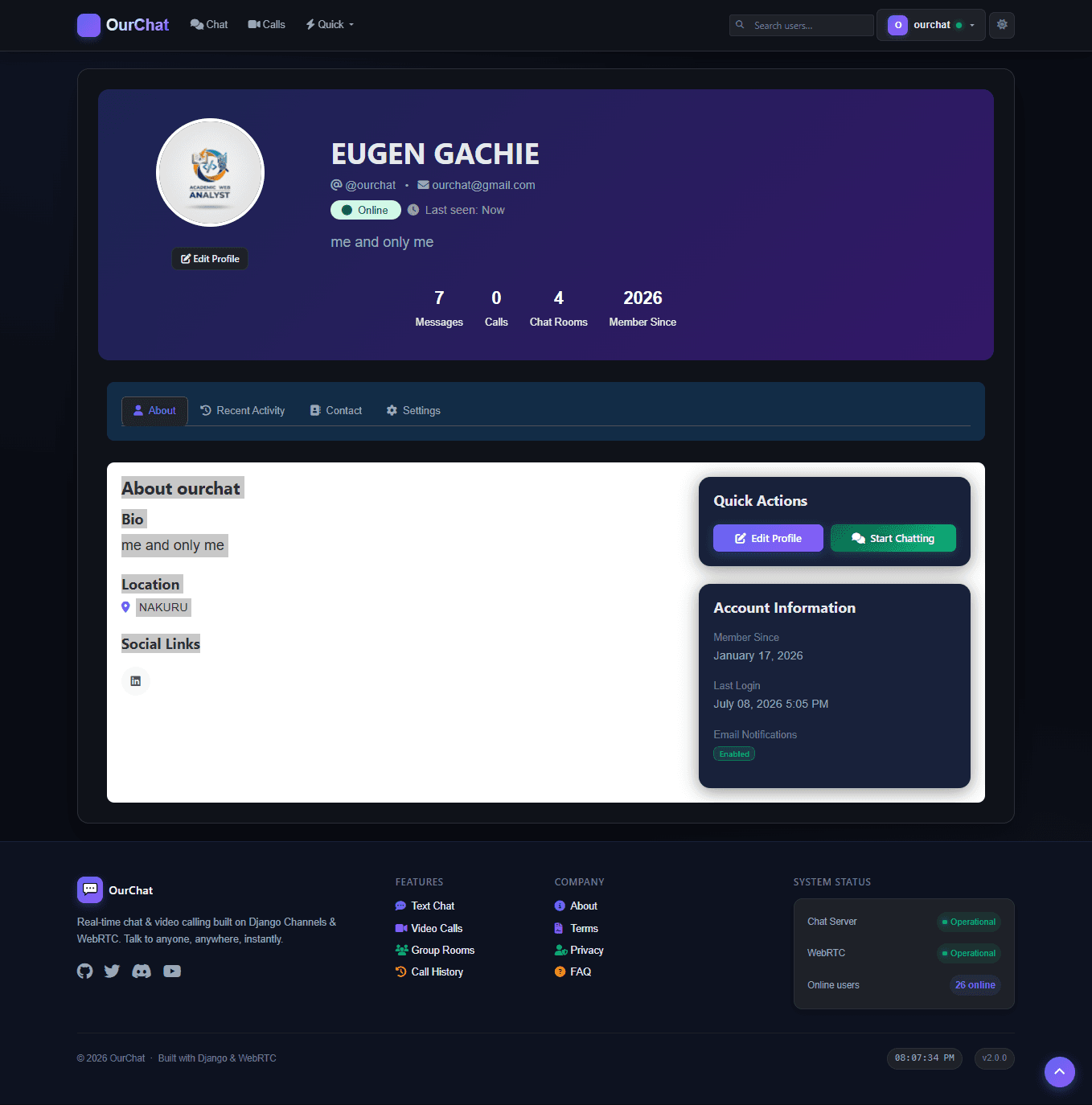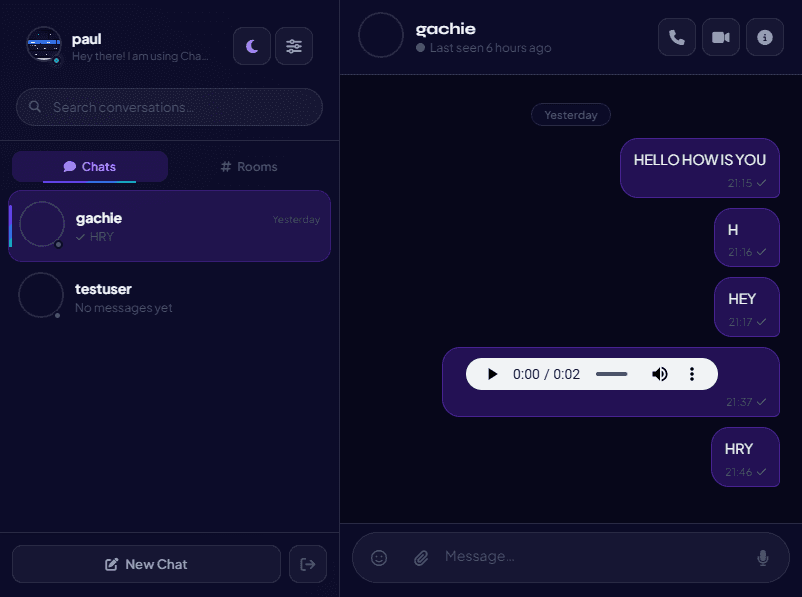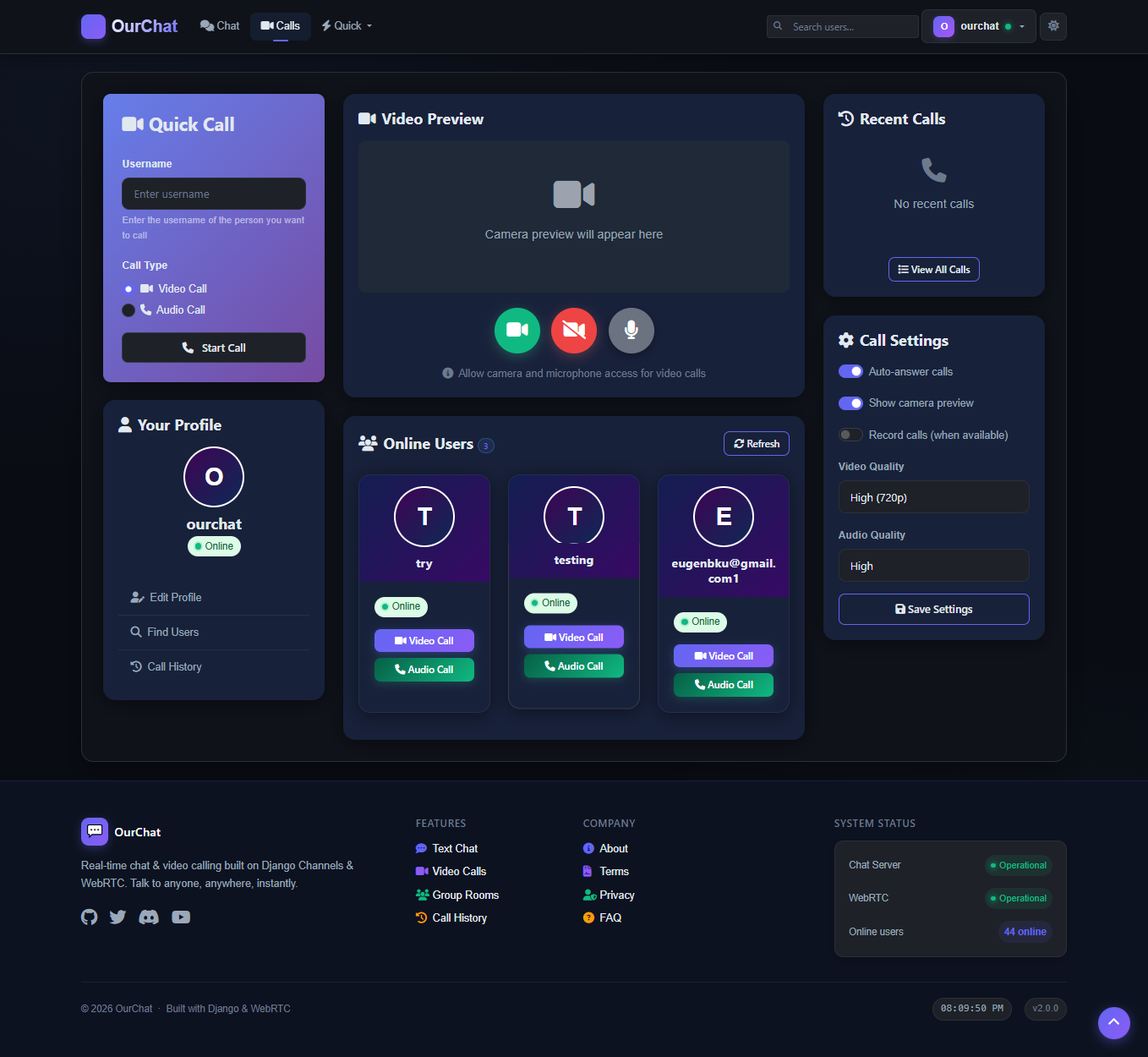
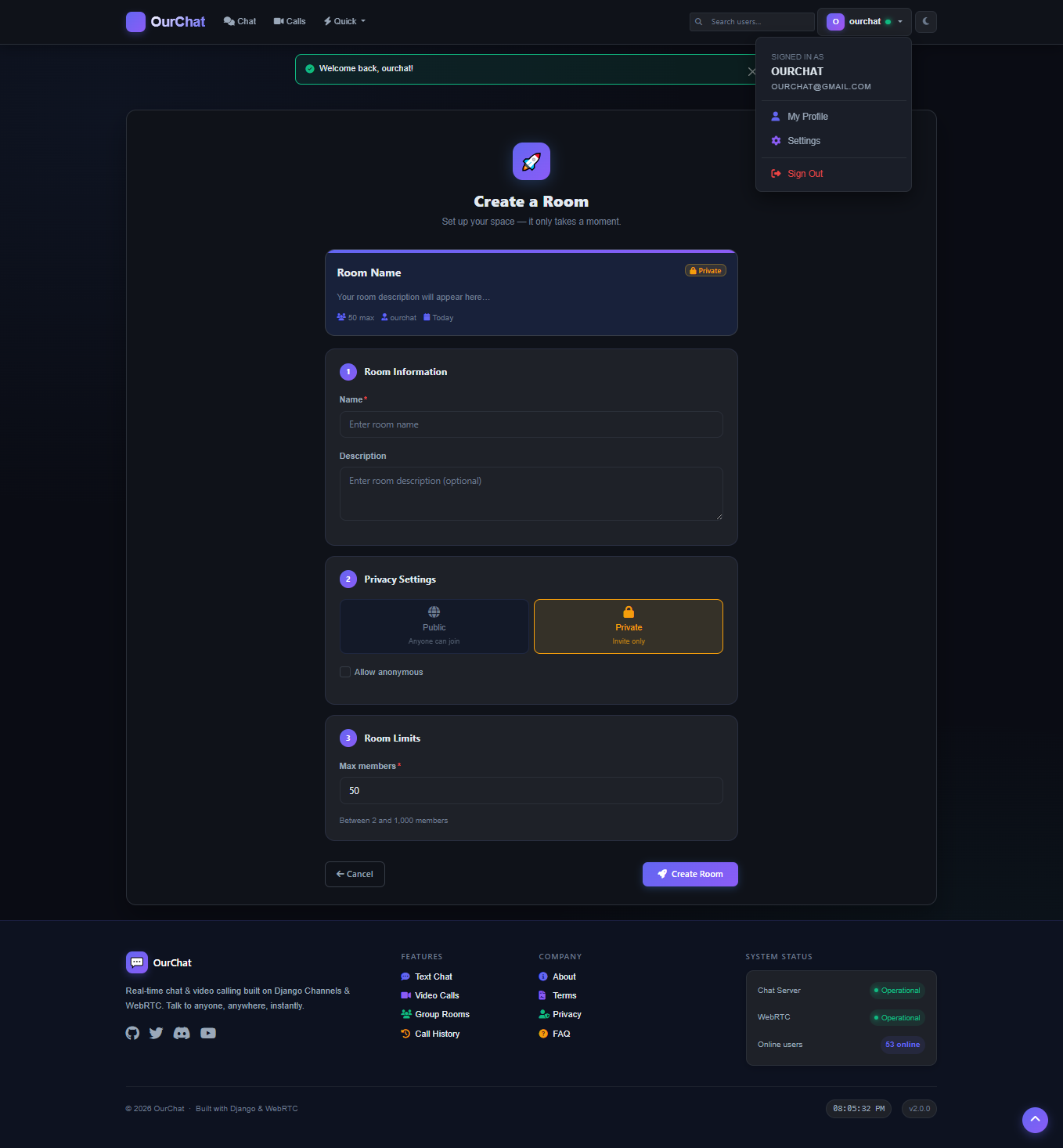
Why These Technologies?
Each component in our stack was chosen to solve a specific challenge—from rapid prototyping to real‑time communication and secure user authentication. Below is the rationale behind every key decision.
🐍 Django – The Full‑Stack Foundation
Django provides the backbone for our entire platform. Its “batteries‑included” philosophy allowed us to move from concept to production rapidly, without sacrificing security or scalability.
Key Benefits:
- Rapid Development – Built‑in authentication, admin interface, and ORM eliminated weeks of boilerplate coding.
- 🔒 Security‑First – CSRF, XSS, SQL injection, and clickjacking protections are enabled by default.
Enterprise‑Ready – Django’s architecture supports teams of any size, from solo developers to large organisations.
- Admin Interface – A fully functional, zero‑code admin panel for managing users, content, chat rooms, and call sessions.
Why not Flask or FastAPI? While lighter frameworks exist, Django’s integrated ecosystem reduces integration risk and accelerates feature delivery—critical for a production platform with multiple apps (archive, blog, library, collaboration).
🔌 Django Channels – Real‑Time, Async, at Scale
WebSockets and real‑time features are core to our user experience. Django Channels extends Django to handle asynchronous protocols, making live chat and calling seamless.
Key Benefits:
- Async Support – Handles thousands of concurrent WebSocket connections without blocking.
- 📡 Group Management – Simplifies broadcasting messages to room members with built‑in channel layers.
- 🔄 Redis Integration – Provides a scalable, production‑ready channel layer for message routing and persistence.
- 💬 Real‑Time Features – Enables instant messaging, typing indicators, and presence updates out of the box.
🎥 WebRTC – Peer‑to‑Peer Video & Audio
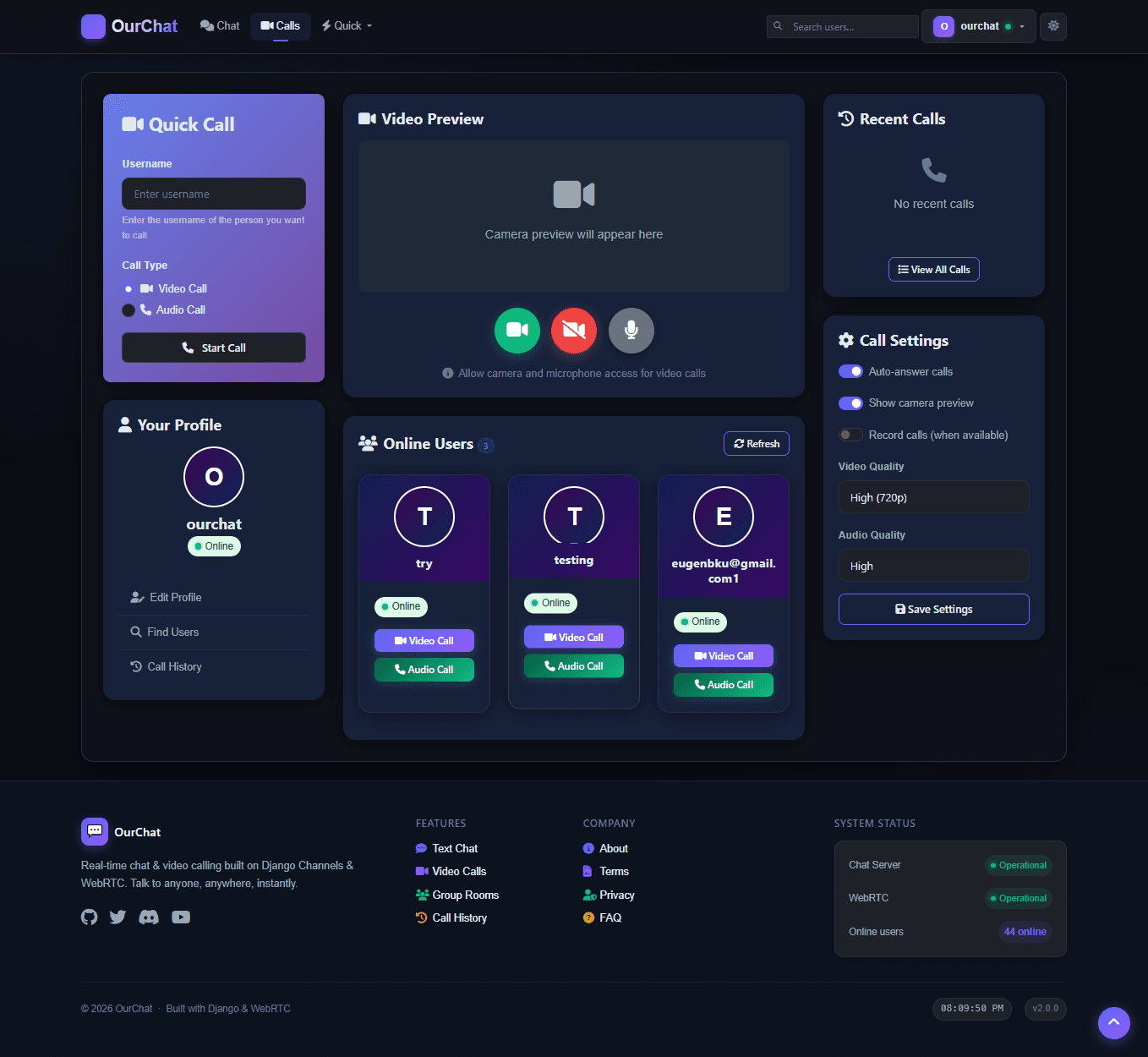
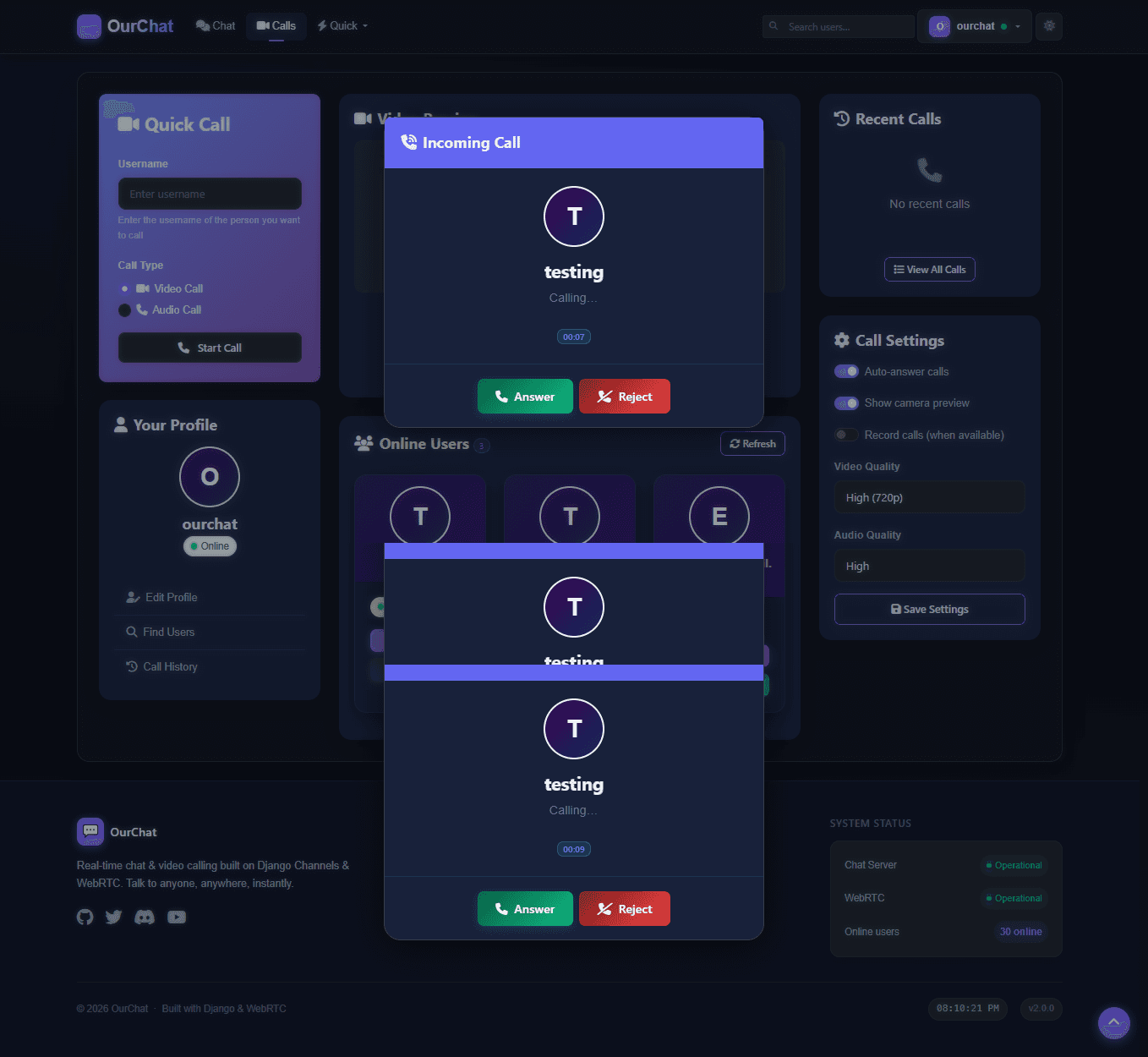
For video and audio calling, WebRTC is the clear industry standard. It offloads server infrastructure by enabling direct peer‑to‑peer communication.
Key Benefits:
- 🌍 Cross‑Platform – Works on all modern browsers (desktop and mobile) without plugins or extra downloads.
- ⏱️ Low Latency – Delivers real‑time media streams with minimal delay, essential for natural conversation.
- 🔐 Built‑in Encryption – All media streams are encrypted by default, ensuring privacy and security.
- 🖥️ Reduced Server Load – Peer‑to‑peer architecture minimises bandwidth and processing costs on our infrastructure.
🎨 Bootstrap 5 – Responsive, Component‑Driven UI
We chose Bootstrap 5 for its mature ecosystem and rapid prototyping capabilities, while still allowing full customisation to match our brand identity.
Key Benefits:
- 📱 Responsive by Default – Mobile‑first grid system ensures the platform works on phones, tablets, and desktops.
- 🧩 Pre‑built Components – Modals, dropdowns, cards, and navbars accelerated UI development by weeks.
- 🛠️ Customisable – Easily themed with CSS variables to reflect our brand colours and typography.
- 🧱 Modern CSS – Full Flexbox and Grid support for complex, dynamic layouts.
🔄 WebSockets – Bidirectional, Persistent Connections
While HTTP is request‑response, WebSockets maintain an open, bidirectional channel—perfect for chat, notifications, and live collaboration.
Key Benefits:
- 📨 Bidirectional Communication – Both the client and server can send messages instantly.
- 🔗 Persistent Connections – No need to re‑establish handshakes for each interaction.
- ⚡ Reduced Overhead – More efficient than long‑polling or AJAX polling for real‑time features.
- 👤 User Presence – Accurate online/offline status tracking and “typing…” indicators.
🔗 How They Work Together
| Layer | Technology | Role |
|---|---|---|
| Backend Core | Django | Authentication, admin, ORM, business logic |
| Real‑Time | Django Channels | WebSockets, async tasks, group messaging |
| Media Streaming | WebRTC | Peer‑to‑peer video/audio calls |
| Frontend UI | Bootstrap 5 | Responsive layouts, components, theming |
| Transport | WebSockets | Bidirectional, persistent client‑server communication |
This combination gives us a secure, scalable, and real‑time platform—without overcomplicating the architecture or duplicating effort across different layers.
Project Gallery